 North Star Dumpster Rental
Dumpster Driveway Protection Buffalo
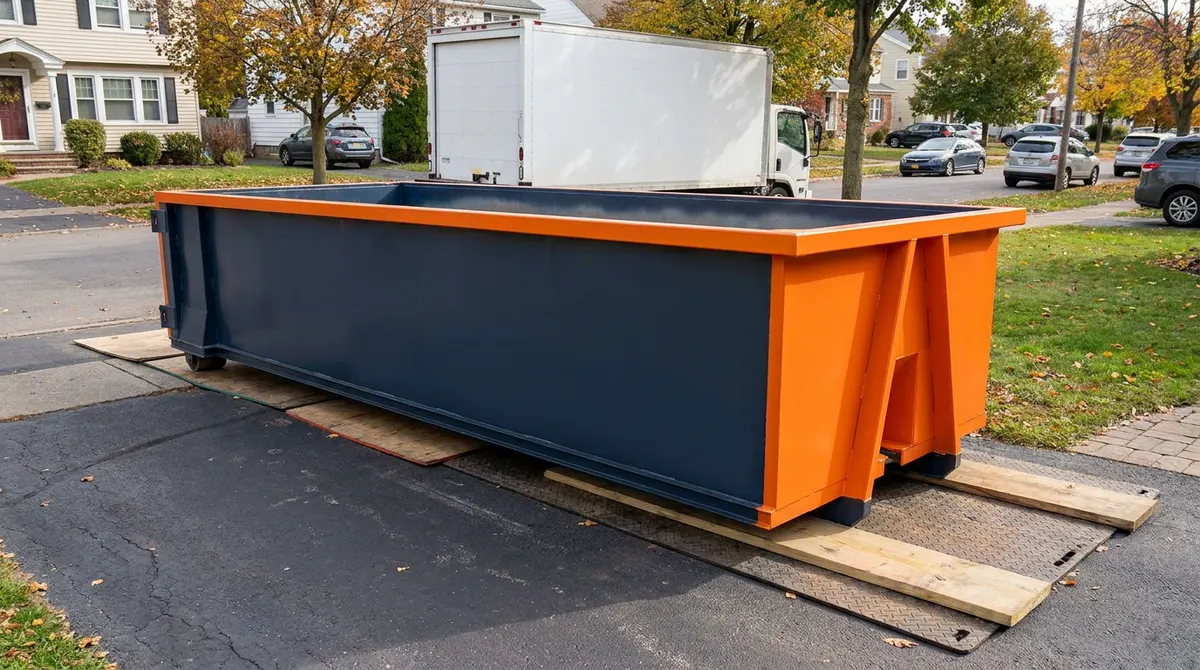
Dumpster driveway protection in Buffalo involves strategic placement and material use to prevent damage to asphalt, concrete, and paved surfaces when a roll-off dumpster is delivered for waste removal. Given Buffalo's specific climate, including lake-effect snow and freeze-thaw cycles, and its older housing stock, proactive measures are often recommended to safeguard driveways during demolition, renovation, or cleanout projects.
What is Dumpster Driveway Protection in Buffalo?
Dumpster driveway protection in Buffalo refers to the methods and materials used to prevent damage to a property's paved surfaces, such as asphalt or concrete, when a heavy roll-off dumpster is delivered and picked up. The process involves placing protective barriers between the dumpster's steel wheels and the driveway surface. This is particularly relevant in Buffalo, where older homes in areas like Elmwood Village and Allentown often have established driveways that can be susceptible to heavy loads. The weight of a fully loaded 20-yard or 30-yard dumpster, often used for significant projects like roof tear-offs or gut renovations common in Buffalo's pre-1940 wood-frame homes, can range from several tons up to 10 tons or more, necessitating protective measures.
How Delivery Trucks Place a Dumpster
The delivery process for a roll-off dumpster involves a specialized truck that uses hydraulic systems to unload and load the container. A roll-off truck approaches the designated placement area, typically a driveway, and extends two rear outriggers to stabilize itself. The container is then slowly rolled off the truck's bed onto the ground using a system of rollers and a winch. The dumpster's steel wheels are the primary points of contact with the driveway during placement and retrieval. When the dumpster is picked up, the process is reversed: the truck backs up, engages the dumpster with a hook, and uses the winch to pull the container back onto the truck bed. This entire operation requires a clear, level surface and sufficient overhead and side clearance. In Buffalo's residential areas, especially those with narrower streets and driveways like parts of North Park or Riverside, precise truck maneuvering is often required, making a pre-delivery assessment beneficial.
Protecting Asphalt and Concrete Driveways
<p>Protecting asphalt and concrete driveways from potential damage caused by a dumpster’s weight and movement is a common concern for Buffalo homeowners. Several methods can be employed to create a barrier between the dumpster and the paved surface.</p><ul><li><strong>Plywood Boards:</strong> Placing two sheets of 4'x8' plywood, at least 3/4-inch thick, under the dumpster's rails is a widely recommended method. The plywood distributes the weight over a larger area, reducing direct pressure points from the steel wheels on the asphalt or concrete. This is especially useful for preventing gouges or cracks on softer asphalt surfaces during warmer Buffalo months or under heavy loads.</li><li><strong>Wooden Planks or 2x4s:</strong> Similar to plywood, heavy wooden planks or multiple 2x4s can be laid down to act as a buffer. These should be sturdy enough to withstand the weight and should extend beyond the length of the dumpster's rails to ensure full support.</li><li><strong>Rubber Mats:</strong> Industrial-grade rubber mats offer another protective layer. These mats provide cushioning and friction, which can help prevent the dumpster from shifting while also protecting the driveway surface.</li><li><strong>Gravel or Crushed Stone Base:</strong> For long-term placements or in areas prone to soft ground, creating a temporary base of gravel or crushed stone can offer robust protection. This method is more involved but provides excellent weight distribution and drainage, which can be advantageous during Buffalo's spring thaw.</li><li><strong>Communication with Rental Company:</strong> Always discuss driveway protection options and concerns with the dumpster rental provider. They often have experience with local conditions and can offer specific recommendations or even provide materials like plywood.</li></ul>
Clearance and Access Requirements
<p>Proper clearance and access are crucial for safe and efficient dumpster delivery and pickup in Buffalo. Failure to meet these requirements can lead to delays or inability to place the dumpster. Understanding these specifications helps prevent issues, particularly in older neighborhoods like Allentown or University Heights with established infrastructure.</p><table><thead><tr><th>Requirement</th><th>Specification</th><th>Notes for Buffalo Properties</th></tr></thead><tbody><tr><td>Vertical Clearance</td><td>Minimum 20 feet</td><td>Crucial for overhead wires, tree branches, and roof overhangs, especially on Main Street or Elmwood Avenue properties.</td></tr><tr><td>Width Clearance</td><td>Minimum 10-12 feet</td><td>Needed for the roll-off truck to maneuver, common issue with narrow driveways in Elmwood Village or Black Rock.</td></tr><tr><td>Length Clearance</td><td>Truck length + Dumpster length</td><td>Typically 50-75 feet total; accounts for the truck's full extension when dropping a container.</td></tr><tr><td>Ground Leveling</td><td>Relatively flat surface</td><td>Prevents uneven weight distribution and ensures stable placement; important for sloped driveways common around Delaware Park.</td></tr><tr><td>Access Route Condition</td><td>Clear of obstacles</td><td>Snow and ice removal is critical in winter; ensure no parked cars, debris, or low-hanging objects block the path.</td></tr></tbody></table><p>Prior to delivery, homeowners should inspect their proposed placement area, ensuring there are no low-hanging utility lines, tree limbs, basketball hoops, or other obstructions. Buffalo's older neighborhoods often have mature trees and older utility infrastructure that can present clearance challenges. If a site visit is needed to confirm placement suitability, especially for larger containers or tight access, arranging one with the dumpster rental company is advisable. For instance, a 30-yard dumpster may require significant space, which might be challenging in densely populated areas like Kaisertown or Lovejoy.</p>
Winter Placement on Snow and Ice
Winter dumpster placement in Buffalo, with its significant lake-effect snow and freeze-thaw cycles, requires specific considerations to protect driveways and ensure accessibility. When temperatures drop below freezing and snow accumulates, the ground beneath a dumpster can become uneven due to ice formation or melting and refreezing. Placing plywood or sturdy wooden boards under the dumpster is even more critical during winter months. These materials help to insulate the ground slightly and distribute the weight more evenly, preventing the dumpster's steel rails from freezing directly to the driveway surface or sinking into soft, thawed ground during a warm spell. Frozen ground can also be brittle, making it more susceptible to cracking under heavy, concentrated loads without protection. Additionally, ensuring the delivery path and the placement area are cleared of snow and ice is essential for the safety of the delivery driver and to allow the roll-off truck to maneuver effectively. A clear path also prevents the dumpster from being set down on an uneven ice layer, which could cause it to tilt or become unstable. Property owners in areas like South Buffalo or Hamlin Park, frequently impacted by heavy snow, should plan for snow removal before delivery to guarantee proper placement and access for eventual pickup. For more detailed guidance on winter waste management, resources from the <a href="https://www.epa.gov/recycle/reducing-wasted-food-home" target="_blank">Environmental Protection Agency (EPA)</a> or local waste authorities can provide context on managing seasonal debris.
Quick questions
Do I need to put wood under a dumpster in Buffalo?
It is highly recommended to place sturdy plywood or wooden boards under a dumpster in Buffalo, especially on asphalt driveways or during winter months. This helps distribute the weight, preventing cracks, gouges, or the dumpster from freezing to the surface due to Buffalo's freeze-thaw cycles.
How much clearance does a dumpster truck need?
A dumpster truck typically requires at least 20 feet of vertical clearance and 10-12 feet of width clearance for safe delivery and pickup. The total length needed for the truck and dumpster to maneuver can be up to 75 feet, which is an important consideration for properties with narrow driveways or low-hanging obstructions in Buffalo's older neighborhoods.
What can I put under a dumpster to protect my driveway?
To protect your driveway, you can use two sheets of 4'x8' plywood (at least 3/4-inch thick), heavy wooden planks, or industrial-grade rubber mats under the dumpster's rails. These materials create a barrier that distributes the dumpster's weight and prevents direct contact with the pavement.
Does a dumpster damage concrete?
While concrete is more durable than asphalt, a heavy dumpster can still cause damage, especially if the concrete has existing cracks or is not properly cured. The concentrated weight of the dumpster's steel wheels can lead to new cracks or spalling, making protective measures like plywood advisable.
Will a dumpster leave marks on my driveway?
Without proper protection, a dumpster can leave marks on a driveway, including scratches, gouges, or even tire marks from the delivery truck. Plywood or other protective barriers are used to minimize these potential markings by spreading the load and creating a buffer.
Need it handled now? See Dumpster Rental in Buffalo.